WeatherPop Español (Aviso)
- 4.6
- Rating
- 50.00K
- Installs
- Free
- Price
 Analysis by App-foxy
If you want a straightforward way to check the weather in Spanish, WeatherPop Español is worth a look. I found it approachable from the first launch, especially because it is focused on the basic question most people have before leaving home: what should I expect outside, and do I need to change my plans? It is a free weather app from WeatherPop, rated for Everyone, and it runs on Android devices using version 7.0 or later.
My first impression was that this is aimed at people who prefer a quick weather check rather than a complicated dashboard. The store summary describes it as a smart way not to miss the weather, while the short description identifies it as “WeatherPop Español.” That Spanish focus matters for users who would rather read forecasts, labels, and daily information in Spanish than translate a general-purpose weather tool in their head.
After installing it, I would think of it as a practical daily companion rather than a specialist meteorology instrument. It makes the most sense for checking conditions before commuting, arranging an outdoor errand, deciding what to wear, or seeing whether a planned walk still seems sensible. If you need highly detailed storm analysis, professional maps, or a large collection of technical weather layers, a more advanced alternative may suit you better.
You May Also Like

 Pandora - Music & Podcasts
Pandora’s Music Is Easy to Start, but Harder to Recover
Pandora’s strength is its low-effort path from a seed to a station. Its weak spot is how much confidence it asks you to place in connection, setup, and quiet recovery.

 8 Ball Pool
 Is Built on Rivalries, Rematches, and Routine
A close look at the rivalries, rematches, shared routines, and unanswered safety questions that turn a quick pool match into a persistent mobile community.

 Samsung Music
’s Quiet Strength Is Playing What You Already Own
Its reach comes less from spectacle than from dependable access to a personal library. That simplicity is both the app’s strongest retention engine and its ceiling.

 AccuWeather: Weather Radar
AccuWeather Review: A Quick, Clear Forecast for Everyday Decisions
For everyday plans, the best forecast is the one you can understand quickly. AccuWeather makes rain timing, radar, and local conditions easy to act on, with a few trade-offs.

 Hill Climb Racing
Why Hill Climb Racing Still Turns Crashes Into One More Run
A tiny car, a bumpy hill and one more upgrade: Hill Climb Racing keeps resurfacing because its simple chaos makes every near-miss feel personal.

 AliExpress - Shopping App
AliExpress Makes Global Shopping Feel Personal, but Shoppers Bear the Risk
AliExpress turns a global marketplace into a pocket-sized discovery engine. Its reach is useful, its shopping loop compelling, and its trade-offs easy to miss.
More From Our News Desk
View All News


What the first launch feels like
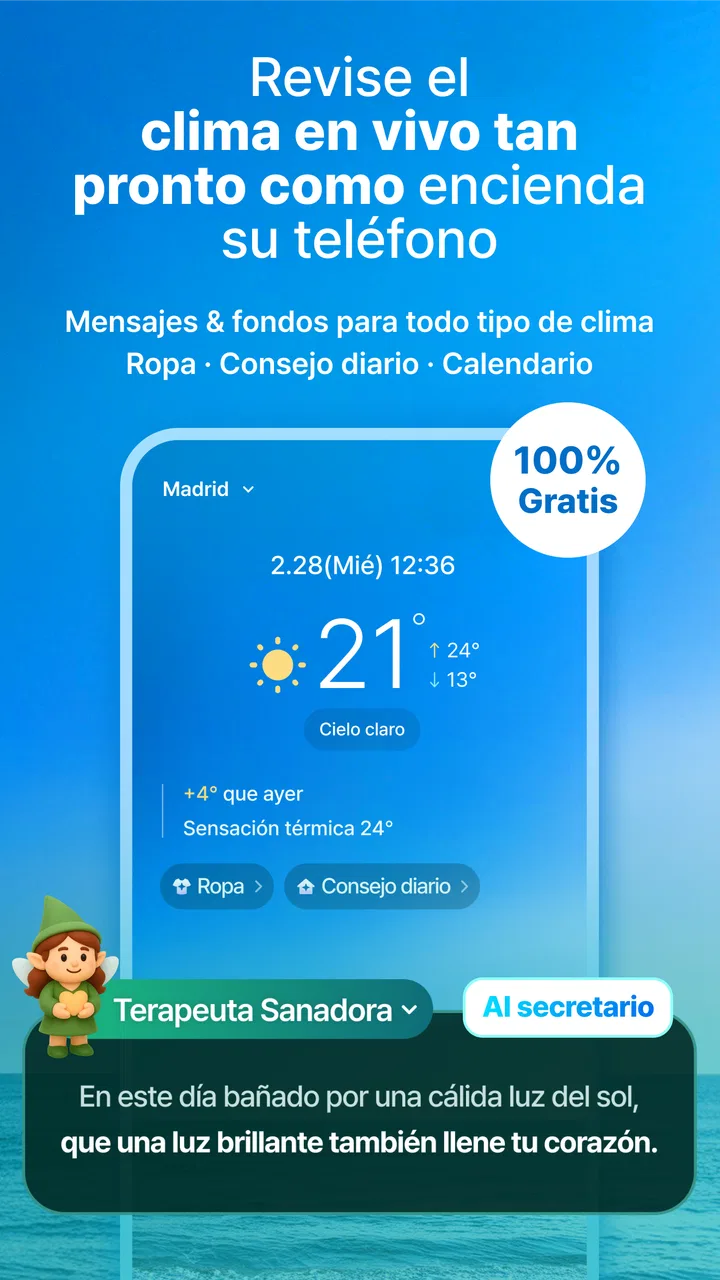
The app’s biggest advantage is its low barrier to entry. A first-time user does not need to understand weather terminology before getting value from it. The useful habit is simple: open the app, look at the current information and the upcoming forecast, then compare that with the activity you have planned. That makes the first meaningful success easy to recognize: you check it before leaving and make a better decision.
I also like that the app’s identity is clear. WeatherPop Español is not presented as a social platform, a complex planning suite, or a news reader. It belongs in the everyday weather app category, and its Spanish presentation gives it a more specific purpose than a generic forecast utility. The developer, WeatherPop, has kept the product small enough to feel accessible, with over fifty thousand installs and a 4.6 average from roughly three hundred ratings.
Those figures suggest that it has found an audience, but I would not treat popularity as a substitute for testing it in your own area. Weather apps can feel excellent in one location and less useful in another because forecast quality depends on local coverage and changing conditions. My advice is to use it for ordinary planning first, then decide whether it is reliable enough for your particular routine.
What you should have ready before using it
The most useful preparation is simply knowing the place you want to follow. If you are checking the weather for home, start there. If your day involves a trip, remember that the weather at your destination may be more relevant than the weather where you are standing. This small distinction prevents a common mistake: assuming that a clear morning at home means the same conditions will continue across the whole journey.
I would also avoid judging the app after a single glance. Weather is time-sensitive, so a forecast is more useful when you check it near the moment you need to act. A quick look before breakfast can help with clothing, but another look before leaving can be more valuable if your plans involve several hours outdoors.
Getting through the initial setup
For a new user, the best approach is to move through the opening screens calmly and read each location-related choice instead of tapping through automatically. The central decision is which place you want to monitor. Choose the location that matches your real use: your home for routine checks, your workplace for commuting, or a destination when planning an outing.
This is also where I would form a good habit around location accuracy. If the app offers more than one way to identify a place, select the option that you can understand and control. A manually chosen city can be more predictable for someone who travels between places, while an automatically detected location can be convenient for a user who mainly checks the weather where they currently are. The right choice depends on your routine, not on which option sounds more advanced.
Once the initial location is ready, spend a moment identifying the parts of the screen you will use most. Look for the current conditions, the forecast period, and any indication of changing weather. You do not need to memorize every label. The goal is to know where to look when you are in a hurry, because that is when a weather app either proves useful or becomes frustrating.
The Spanish interface is especially helpful if you naturally think about weather in Spanish. Familiar wording reduces the pause between opening the app and making a decision. That may sound minor, but it is important when you are checking conditions while getting ready for school, work, or an appointment.
Your first useful action
For me, the first successful action with this app would be using it to make one concrete decision instead of merely browsing. Imagine that you are leaving for a short walk and are unsure whether light clothing is enough. Open the app, check the current information, review how conditions are expected to develop, and decide whether to take an extra layer or change the timing of the walk. That is a small task, but it shows whether the app fits your daily rhythm.
A second realistic example is the morning commute. Before heading out, I would compare the immediate conditions with the rest of the journey and avoid relying only on what I can see through the window. A bright sky does not always tell the whole story, and a quick forecast check can prevent an unnecessary return home for a jacket or umbrella.
The important technique is to connect the weather information to a decision. Do not open the app just to read numbers or labels and then close it without acting. Ask yourself what the forecast changes: clothing, departure time, route, equipment, or whether an outdoor plan should move indoors. This workflow makes a simple app more valuable than a crowded screen full of information that never affects your choices.
I would also use the app before plans that involve other people. If friends are meeting outdoors, checking conditions early gives everyone time to adjust. The app does not need to replace conversation or common sense; it simply gives you a shared starting point for deciding whether the plan still makes sense.
Small habits that improve the experience
One useful habit is to check the forecast at two different points when the day matters. The first check helps you prepare, while the later check helps you respond to changes. This is more practical than opening the app repeatedly without a purpose. It also keeps the app from becoming a source of unnecessary worry over every minor variation.
Another good habit is to judge forecasts against the actual conditions you experience. If the app becomes part of your routine, you will naturally learn whether its information feels dependable for your neighborhood and the times you care about. That personal comparison is more useful than assuming every weather service performs identically everywhere.
For travel, I would check the destination separately rather than treating the home location as a general forecast for the whole day. This is one of the easiest ways to get more value from a location-based weather tool. A short trip can cross different local conditions, so the place you are going may deserve the final check before you leave.
Where first-time users may get confused
The most common confusion with weather apps is mistaking a forecast for a guarantee. WeatherPop Español can help you plan, but it cannot remove uncertainty from changing conditions. If the forecast suggests a comfortable morning, I would still use ordinary judgment for a long outdoor activity, particularly when the consequences of being wrong are inconvenient.
Another possible friction point is location selection. A user who moves between home, work, and travel destinations may expect the app to know which place matters at every moment. That expectation can lead to checking the wrong forecast. Before trusting the screen, confirm that the displayed place matches the activity you are planning. This quick check is more important than rushing straight to the temperature or condition label.
Spanish users should find the presentation more natural, but language preference alone does not make an app ideal for everyone. If you need weather information in another language, or if your household regularly switches languages, a broader alternative may be more convenient. Likewise, people who want radar imagery, detailed alerts, air-quality readings, or specialized outdoor information should compare this app with services built around those needs.
I would also be careful about using any weather app as the only source for safety-critical decisions. For a normal walk, commute, or shopping trip, it is a sensible planning aid. For severe weather preparation, aviation, boating, mountain travel, or emergency response, I would consult official local information as well. The limitation is not unique to this app; it is a reminder that a compact everyday forecast should not be treated like a professional warning system.
The app’s free price makes trying it low-risk, which is a real advantage for first-time users. You can see whether its Spanish presentation and forecast workflow suit you without committing money. At the same time, free access should not create unrealistic expectations that it will replace every specialized weather service. Its strength is convenience and everyday readability, not necessarily depth for every possible use.
Its age rating of Everyone also makes it suitable for a broad household audience. I can imagine a parent using it to help a child decide what to wear, or an older relative choosing a Spanish-language interface that feels more comfortable. Still, younger users should learn the same basic lesson adults need: a forecast supports a decision, but it does not guarantee what will happen outside.
How it compares with familiar alternatives
Compared with the built-in weather screen on a phone, WeatherPop Español is most appealing when its Spanish-focused presentation feels easier to read and more natural for your routine. A system widget may be faster for a one-second glance, especially when you already have it configured. However, opening a dedicated app can encourage a more deliberate check before an important outing.
Compared with large weather platforms, this app may feel less overwhelming. That is an advantage if you want the answer to “what should I expect today?” without navigating several layers of maps, articles, and specialist data. The trade-off is that users who enjoy detailed visual analysis may find a larger service more satisfying.
Compared with simply searching the web, a dedicated app gives weather checking a repeatable place in your routine. You do not need to formulate a new search every morning, and the Spanish context is part of the experience. The downside is that a web search can be useful when you want to compare several locations quickly or consult an official source during unusual conditions.
My practical recommendation is to choose based on the decision you make most often. Pick WeatherPop Español if you want a focused Spanish weather check for everyday planning. Choose a more advanced service if your decisions depend on specialist layers, broader environmental information, or detailed severe-weather monitoring. There is no benefit in selecting the most feature-heavy option if you only need a clear answer before leaving home.
Who will get the most from it
I think this app is a good match for first-time weather-app users, Spanish-speaking households, commuters, students, and anyone who wants a quick forecast without learning a complicated interface. It is also a sensible choice for people who prefer a dedicated app over repeatedly searching the internet.
It is less suitable for professional outdoor work, demanding travel, or users who want to study weather patterns in depth. If you plan hikes where conditions can change quickly, organize events that depend on precise timing, or need specialized warnings, I would keep a more authoritative source available alongside it.
WeatherPop Español was released on January 5, 2024, and its current version is 0.10.3.5. I mention the version because first-time users sometimes wonder whether an app that feels compact is still being presented as a current product. In practice, the more important question is whether the interface, language, and local forecast behavior work well for you.
My recommendation after using it
I would recommend giving WeatherPop Español a fair trial by using it for several ordinary decisions rather than opening it once and judging the design immediately. Set up your main location, check it before a commute, use it before an outdoor plan, and compare what it showed with what you actually experienced. That process tells you much more than a quick first impression.
What I like most is the clear path from installation to usefulness: choose a place, read the Spanish forecast, and turn it into a practical decision. The app does not need to dominate your day to be helpful. In fact, its value comes from fitting into short moments when you need confidence about what to expect.
My final view is positive, with sensible limits. WeatherPop Español is a free, approachable weather app for everyday checks, particularly for people who want Spanish-language information and a simple routine. It is not the option I would rely on alone for specialized or safety-critical forecasting, and users seeking extensive technical tools may prefer a larger alternative. For the first-time user who mainly wants to avoid being caught unprepared, though, the best reason to try it is its simple path from forecast to action.
FAQs for WeatherPop Español (Aviso)
01What is WeatherPop Español (Aviso), and what does it do?
WeatherPop Español (Aviso) is a weather application designed for users who prefer to receive forecasts and alerts in Spanish. After reviewing its main features, the app appears focused on presenting current conditions, upcoming forecasts, and weather notifications in a simple format. It can be useful for checking temperature, rain, wind, and other conditions before commuting, traveling, or planning outdoor activities.
02Does WeatherPop Español (Aviso) provide weather alerts and notifications?
Yes, the application is intended to keep users informed through weather-related notices and alerts, although the exact availability may depend on the selected location, device settings, and regional weather-data sources. Before relying on it for severe-weather situations, users should verify that notifications are enabled, location access is correctly configured, and alerts are supported in their area. It should complement, rather than replace, official emergency warnings.
03Does WeatherPop Español (Aviso) require location permission?
Location permission may be requested so the app can display weather conditions and forecasts for your current area. You can usually choose whether to allow precise location access, approximate location access, or manually select a city, depending on the version and operating system. If privacy is a concern, selecting locations manually can reduce background location use while still allowing you to check forecasts.
04Is WeatherPop Español (Aviso) free to download and use?
The app may be available as a free download, but users should review the Google Play Store or Apple App Store listing for the current pricing, advertising, and in-app purchase information. Weather applications sometimes offer their basic forecasts at no cost while reserving advanced alerts, ad-free viewing, widgets, or extra forecast details for premium access. Availability and conditions can vary by country and platform.
05Is WeatherPop Español (Aviso) suitable for everyday weather planning?
WeatherPop Español (Aviso) can be convenient for everyday checks such as deciding what to wear, planning a walk, monitoring rain, or checking temperatures before leaving home. Its Spanish-language presentation may be especially helpful for users who prefer localized weather information. However, forecast accuracy can vary by location and changing conditions, so important travel, safety, or emergency decisions should also be confirmed through official meteorological services.
Pros
- Spanish-language alerts are easy to understand at a glance.
- Useful for checking conditions before commuting or traveling.
- Weather warnings can help users prepare for sudden changes.
- Simple concept focused on timely notification delivery.
- May be helpful for users who prefer alerts over detailed forecasts.
Cons
- Alert usefulness depends on accurate location permissions.
- Frequent notifications may become distracting over time.
- Coverage and warning quality can vary by region.
- Some features may require background activity and battery use.
- Not ideal for users seeking radar
- maps
- or detailed forecasts.

WeatherPop Español (Aviso)
Gallery